About Us
We are a virtual clinic, made possible through the dedication and commitment of our student and clinician volunteers, in collaboration with our community partners.
Our core service is providing forensic psychological evaluations to corroborate asylum seekers’ claims, with expanded services supporting individuals applying for other forms of humanitarian relief.
According to a study by Atkinson et al. (2021), asylum seekers and other immigrants who obtained a forensic evaluation were granted protection in nearly 82% of cases in a ten-year period; nearly twice the national asylum grant rate of roughly 42% in that same period (2008-2018).1
Social Justice
Members of the SDP-Keck Human Rights Clinic provide services on behalf of asylum seekers in several ways, most significantly by providing trauma-informed, pro-bono forensic psychological evaluations. Asylum evaluations are used to assess whether the individual has a well-founded fear of persecution based on one or more protected grounds: race, religion, nationality, membership in a particular group, or political orientation.2,3
The process of applying for and being granted asylum is complex and can take many years.4 Applying for asylum in the United States has become increasingly difficult with the implementation of policies such as the Migrant Protection Protocols in 2019, which correlates with an increase in occurrence of migration-related trauma and PTSD among asylum seekers.5 In recognition of these difficulties, we aim to help asylum seekers with their application process by providing resources and evaluations at zero cost.
Commitment to Education
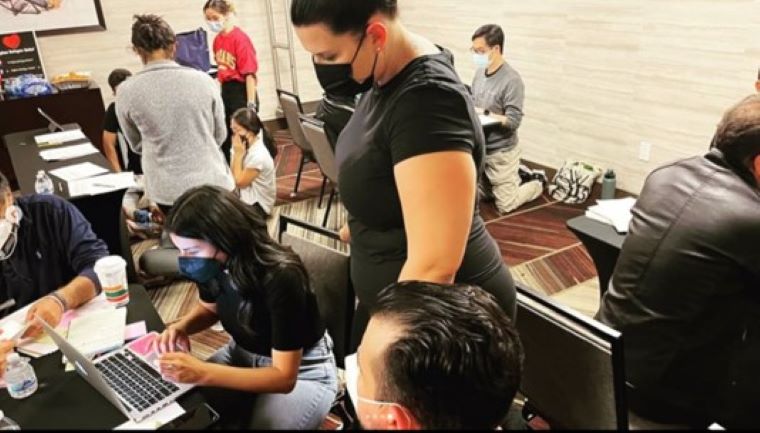
We are a teaching clinic where students are given the opportunity to assist with forensic evaluations, allowing students to gain experience as advocates for human rights while supporting volunteer licensed clinicians. Students learn about global issues, cultural humility, and have the opportunity to engage colleagues and professionals across public health related disciplines. We offer professional development opportunities to our volunteers, and educational events to the community.
We are proud to share our Five-Year Impact Report, reflecting on the individuals we serve, the experiences they carry, and the collective effort behind every evaluation.
Five-Year Impact Report
Testimonial
Testimonials
From Clinician Volunteers
“Thank you for your amazing work.”
“Over the years, I have recommended a number of psychiatry residents to the program and am pleased at how many have participated in these forensic evaluations.”
From Attorneys
“I am always grateful for the insightful and thorough evaluations provided by the clinic.”
“I deeply appreciate the responsiveness, communication, and commitment to placing my case with a clinician. I especially valued the team’s willingness to work with a detained client.”
Sources
Atkinson HG, Wyka K, Hampton K, Seno CL, Yim ET, Ottenheimer D, Arastu NS. Impact of forensic medical evaluations on immigration relief grant rates and correlates of outcomes in the United States. J Forensic Leg Med. 2021 Nov;84:102272. doi: 10.1016/j.jflm.2021.102272. Epub 2021 Oct 28. PMID: 34743036.
J Am Acad Psychiatry Law 53:2–10, 2025. DOI:10.29158/JAAPL.240084-24
Mercado A, Antuña CS, Bailey C, et al. Professional guidelines for psychological evaluations in immigration proceedings. J Latinx Psychol. 2022; 10(4):253–76
AMA J Ethics. 2022;24(4):E267-274. doi: 10.1001/amajethics.2022.267.
Joyner K, Burner E, Axeen S, Murugan S, English K, Schneberk TW. Migration-Related Trauma Among Asylum Seekers Exposed to the Migrant Protection Protocols. JAMA Netw Open. 2026;9(1):e2550786. doi:10.1001/jamanetworkopen.2025.50786